
Beginner vs. Basic Dance Classes: Which Level Should You Choose?
by DancePlug Inc • 6 min read
The words basic and beginner can sound similar, but they serve different needs in dance training. Choosing the right level helps you build confidence without skipping the foundation your body needs.
Choose basic when you need foundation
Basic classes are the best place to start when movement vocabulary, coordination, counts, or style terminology still feel new. They give you room to understand what is happening before you add more speed or complexity.
This level is also useful when you are brushing up on a style you have not trained in recently. A professional dancer can still benefit from a basic class when the goal is clean foundation.
Choose beginner when you are ready to connect steps
Beginner classes usually assume you can follow simple direction changes, repeat short phrases, and start connecting movement with musicality. They still move carefully, but they ask for a little more flow.
If basic classes help you understand the tools, beginner classes help you begin using those tools in combinations and style-specific movement.
Do not rush the level jump
Moving up too quickly can make online training feel frustrating. If you are always pausing because the foundation is unclear, the issue may not be effort. It may simply be the wrong level for today.
DancePlug lets you move between basic classes and beginner classes as needed. Your training path does not need to be perfectly linear.
Use level as a tool, not a label
A level is not a judgment of your talent. It is a training tool. The right class is the one that helps you improve with enough challenge to grow and enough clarity to stay connected.
What choosing the right level saves you
Choosing the right level saves time and protects your confidence. If the class is too easy, you may stop paying attention. If it is too advanced, you may start blaming yourself instead of adjusting the training path.
The sweet spot is a class where you understand most of the instruction but still have one or two things to work toward.
A quick self-check
After taking a class, ask yourself three questions: Could I follow the counts? Could I repeat the main section without watching every second? Did I understand what to practice next?
If the answer is mostly no, step down a level and build the missing foundation. If the answer is mostly yes, repeat the class once more before moving up.
Where to go next
- Explore beginner dance classes online
- Browse basic classes
- Browse beginner classes
- Browse all class filters
From the DancePlug archive
- How to Navigate Online Classes Based on Your Learning Type
A deeper look at adapting class practice to the way you process movement, sound, and repetition.
Other Articles

How Dance Teachers Can Use Online Classes for Class Inspiration
DancePlug IncHow teachers and studio owners can use online dance classes to stay inspired, plan lessons, and support their own training.
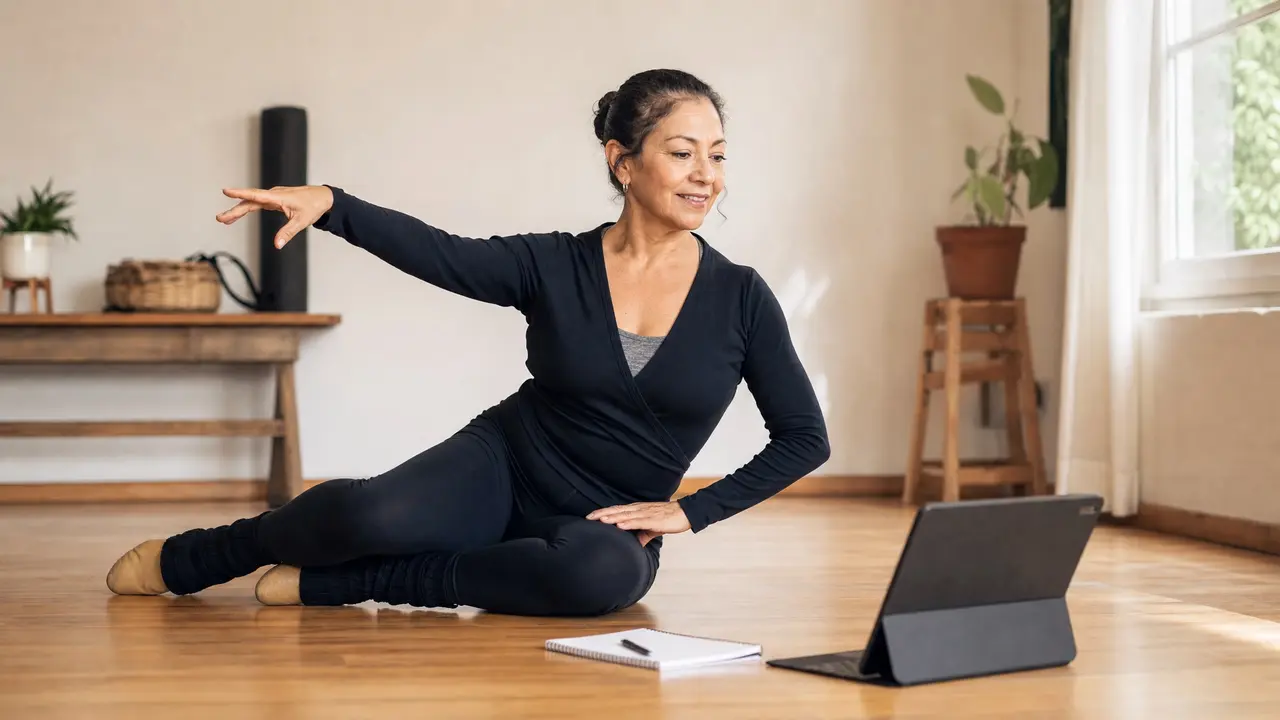
How Adult Beginners Can Learn Dance Without Feeling Behind
DancePlug IncEncouragement and practical structure for adults starting dance online without pressure or comparison.

DancePlug Inc. was founded in 2008 by dancers for dancers, with the simple purpose to raise the awareness of dance through media and the world wide web, as well as to provide a platform for dancers, teachers, and choreographers to promote themselves in an accessible professional way.
Basing ourselves on personal experiences, we decided to fill in a few blanks: an affordable place to create one's professional presence online, a way to learn some new dance steps and styles, a show where one can find out what is currently going on in the world of dance, and so much more.
Nearing ten thousand members and growing everyday, DancePlug is strengthening the dance community by offering a one-stop hub for all things dance. Get plugged in.
Glyn Gray, Anh Dillon and Adam Parson