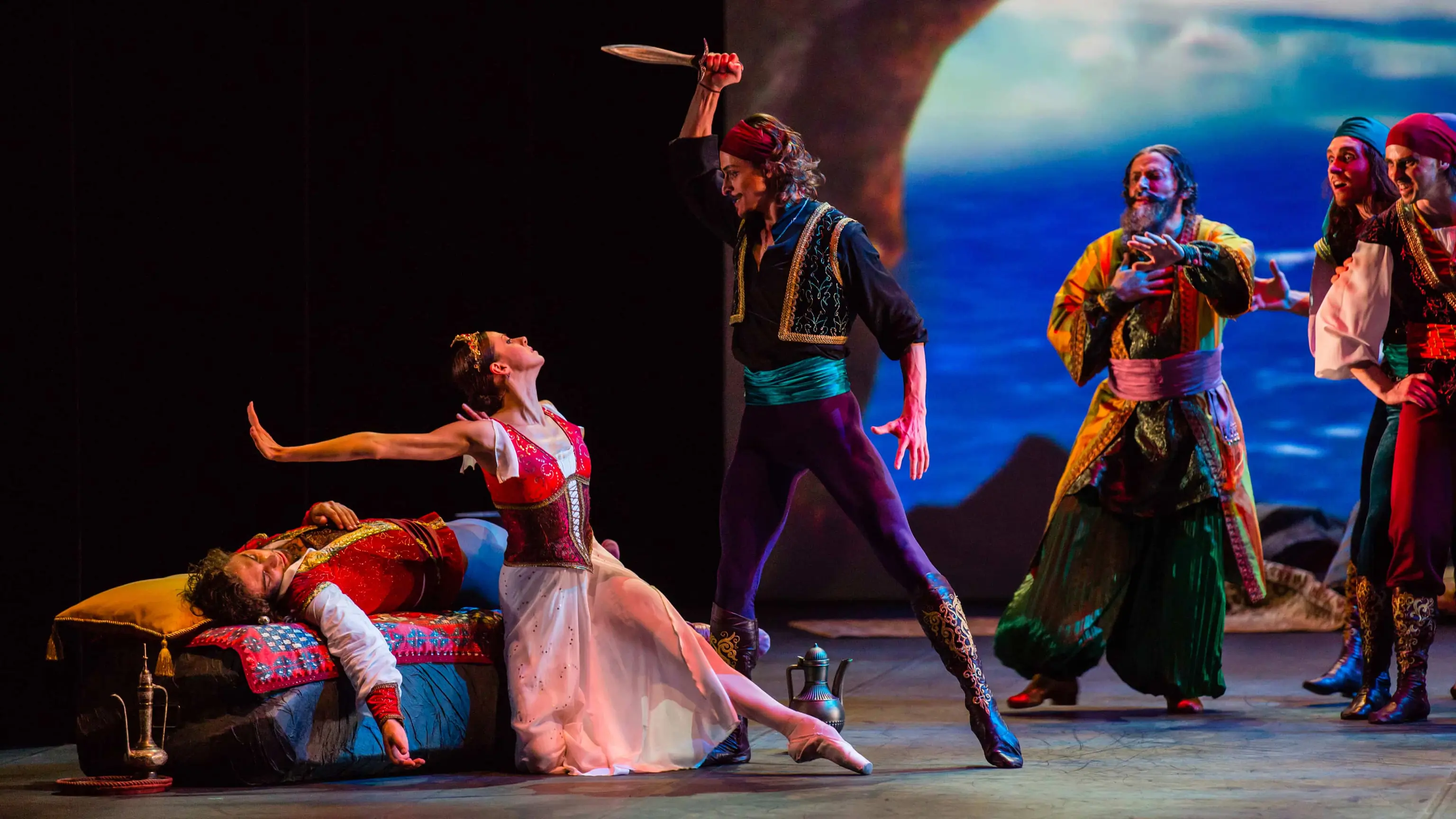
Photo: Sergei Tiagin
“Le Corsaire”, Ballet’s Hapless Fantasy for a Dangerous World
by Steven Woodruff • 2:00 mins read
Mikhailovsky Ballet, a company made in the 21st century by the big money of Russia’s newly minted business kleptocracy, is touring America with its Disney-fied adaptation of an Imperial classic. Based on Byron’s 19th century poem, it’s a story of high seas piracy, Muslim Pashas, sex trafficking, and slave girl seraglios, a perfect, swashbuckling story... for another century. Raymonda and The Nutcracker which are also laced with elements of the exotic Orient, or Mozart’s Abduction from the Seraglio, all trade on an orientalism in the theater which once appealed as exotic entertainment. With the Ottoman Empire camped out on the European frontier during the 19th century, Muslims became Europe’s go to bad guys and rescuing slave girls from sinister Pashas, the work of any hero worth his salt. But the inflamed, modern politics of the Middle East puts all of Corsaire’s colorful escapism in an unforgiving bind. Can we be entertained by the terrorists and abusers of yesteryear while we are locked in actual conflict with their modern day counterparts around the world?
Any classical ballet performance survives on the excellence of its dancing. Ballet classicism, at its heart, is about being perfect, and conveying a sense of 19th century taste and refinement. It has always been spectacularly unconcerned with the racism and lousy politics of its trivial stories and shallow, cardboard characters. Corsaire is particularly thin in this regard. In the end the joyous pirate leader, now united in love, and his mob happily sail off to filch what they can from another Captain Phillips out there somewhere on the high seas. If there’s a moral here, it escapes me.
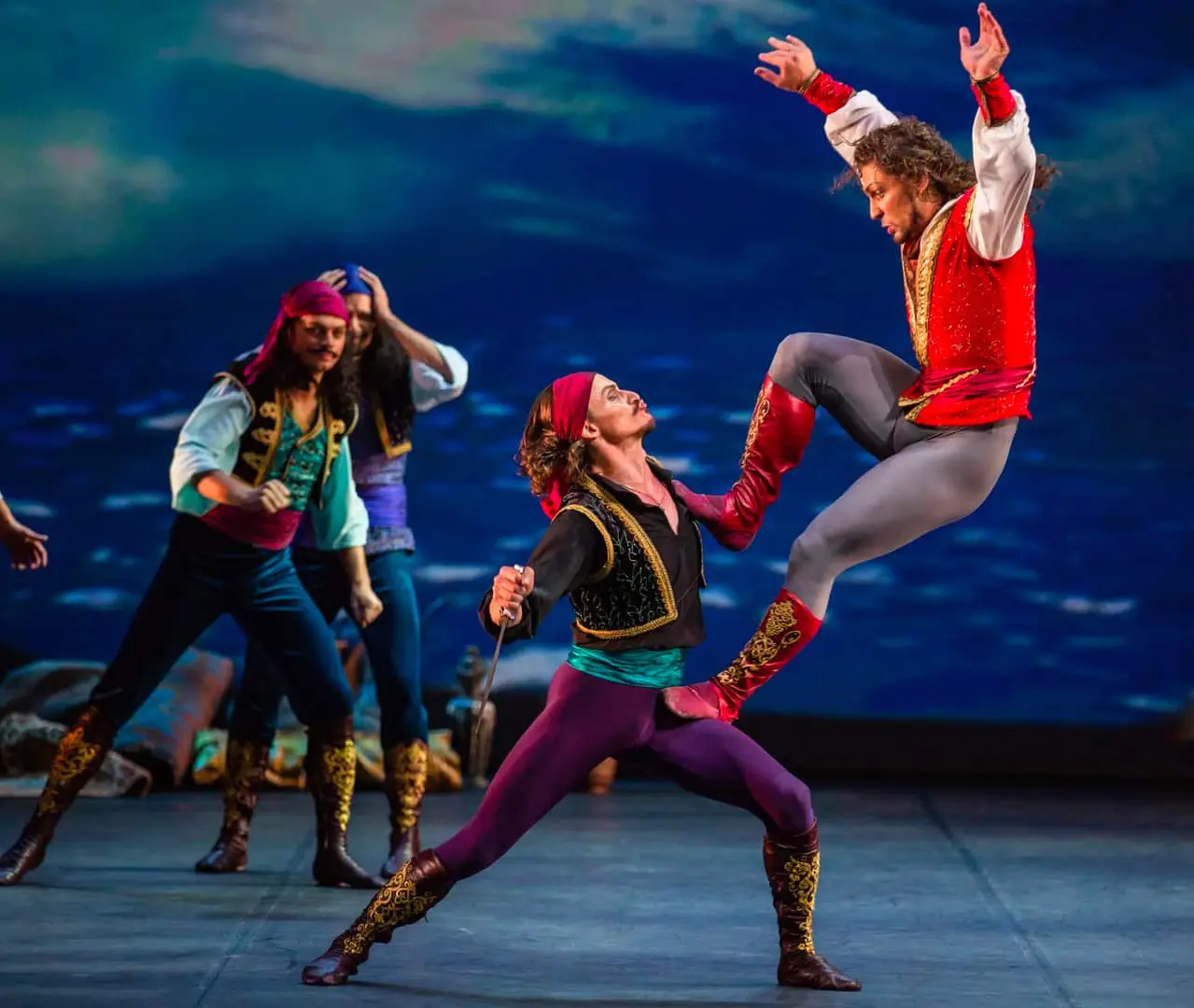
Contemporary performances may make us forget the impoverished stories of these ballets by ginning them up with imaginative new staging. Some, like the English National Ballet’s new “Giselle” choreographed by Akram Khan, manage to make us see the story and dance through new eyes, not just new costumes. Even with astonishing performances by contemporary dancers, inconsequential classical narratives and their flimsy characters can never really seem to matter to us. While so much other entertainment, literature, and film, develop thoughtful, consequential contexts for modern audiences, ballet seems content to embrace its inner Peter Pan, and never grow up.
Other Articles
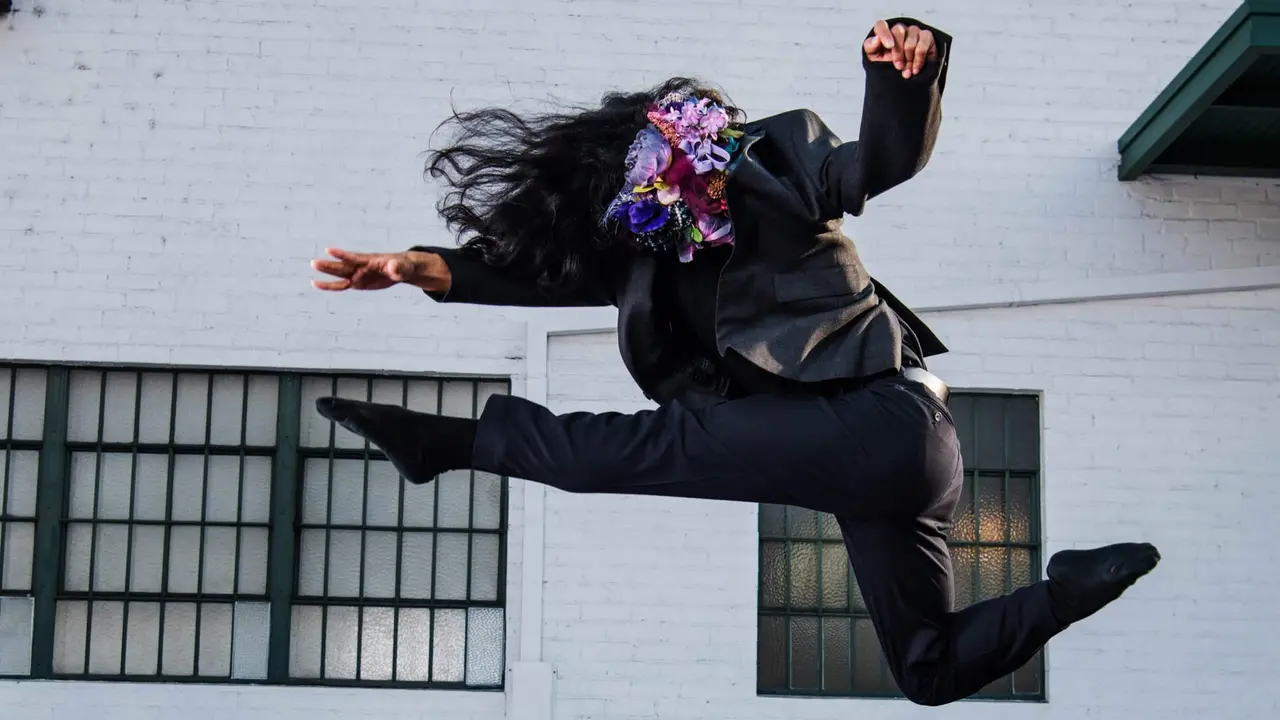
Flowered Faces, Challenging Contexts Mark L.A. Dance Project Return to Live Performance
Steven WoodruffFor a few moments before the beginning of Solo at Dusk, Bobbi Jene Smith’s new, commissioned work for Los Angeles Dance Project, the blue sky above the improvised outdoor theate...

Book Review: “Final Bow For Yellowface” Lays Out A Route Toward Inclusion
Steven WoodruffPhil Chan's book "Final Bow For Yellowface" is an ever relevant read that tackles the topic of racial stereotypes within dance, while laying out a route towards increased inclus...
Steven Woodruff lives in Los Angeles where he is a professional musician, dancer, educator, and writer. His writing includes original poetry and translations as well articles on film, stage, television, and culture. He reviews dance and music covering national and international touring concert programs as well as local companies for DancePlug, DanceChannelTV, and BachTrack in the UK.