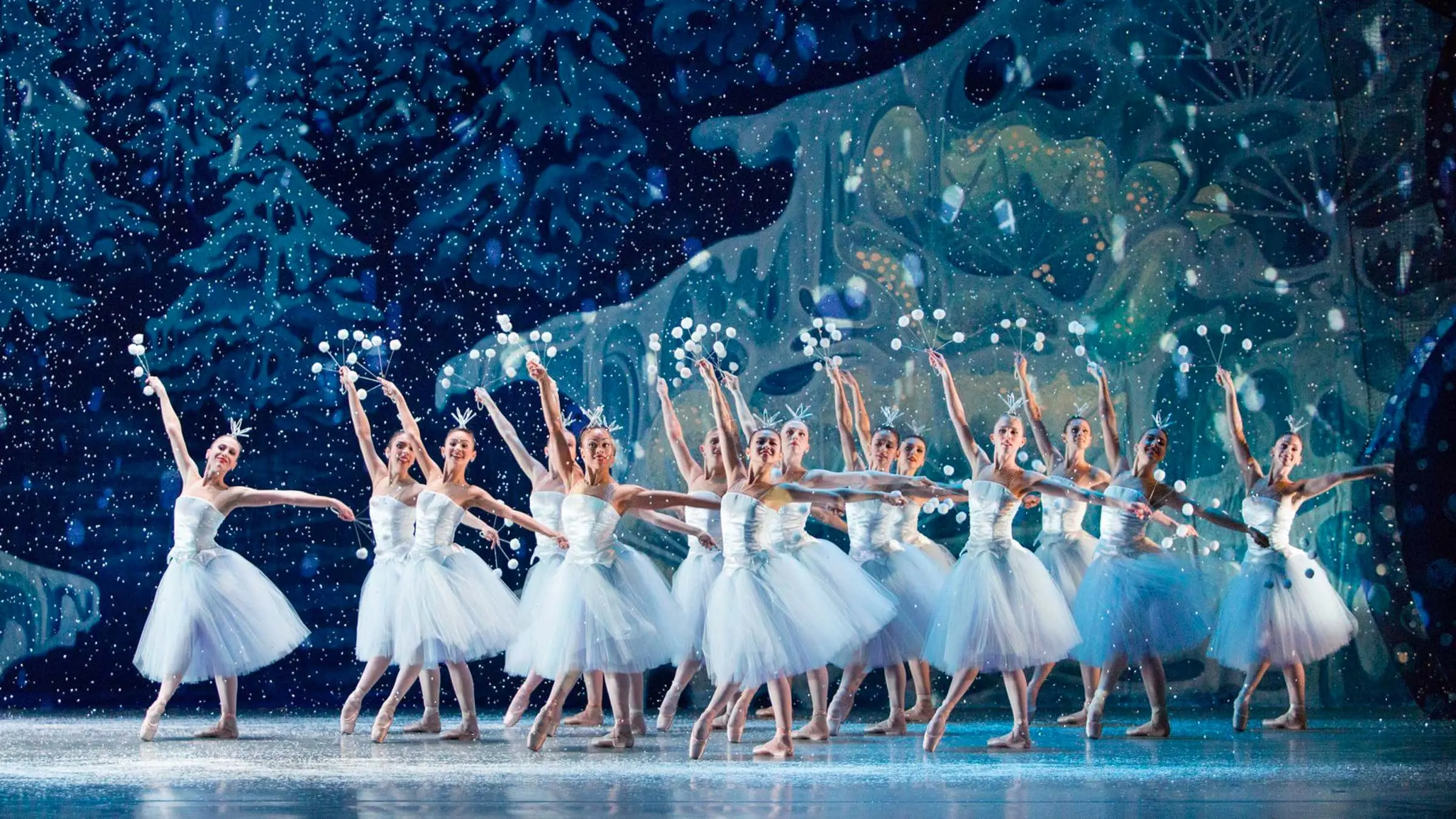
Photo: Alexander Iziliaev
Balanchine’s Nutcracker: Bright New Era For Trademarked Ballet
by Steven Woodruff • 3:30 mins read
Once upon a time there was only one Nutcracker. That original production in 1892 for the St. Petersburg Mariinsky Theatre was a kind of pièce d’occasion but nowhere has it become more popular than in America, where every December, thousands of performances from hundreds of companies light up stages across the country. The dance writer Jennifer Fisher has us dubbed us, Nutcracker Nation. More than any single company we owe that moniker to George Balanchine and his 1953 production for New York City Ballet. It remains today the oldest and most successful version of the ballet continuously performed by a single company anywhere in the world. It has been so successful that the ballet is now trademarked and franchised for performance by other companies.
... Balanchine’s Nutcracker dedicates all the best dancing to women.
One of those franchise holders, Miami City Ballet, is currently performing their version of the production on the Los Angeles Music Center dance series through this weekend. It retains all the choreography and altered musical arrangements of Balanchine’s original, but adds newly designed costumes by Isabel Toledo. It departs significantly in its use of striking vivid visual projections by Wendell Harrington that accompany and overlay some of the traditional stagecraft. It’s also very good, not just for its faithfulness to the original, but for the overall quality of Miami City Ballet’s dancers. Adding brisk tempos and colorful playing to the production were MCB principal conductor, Gary Sheldon, and a stellar cast of LA freelance musicians. The Act I music is still the best 50 minutes of theater dance music anywhere. It bridges the gap between reality and fantasy with colorful orchestrations and a restless energy unlike any other music for ballet.
... a second act that makes good on the highest demands of classical dance
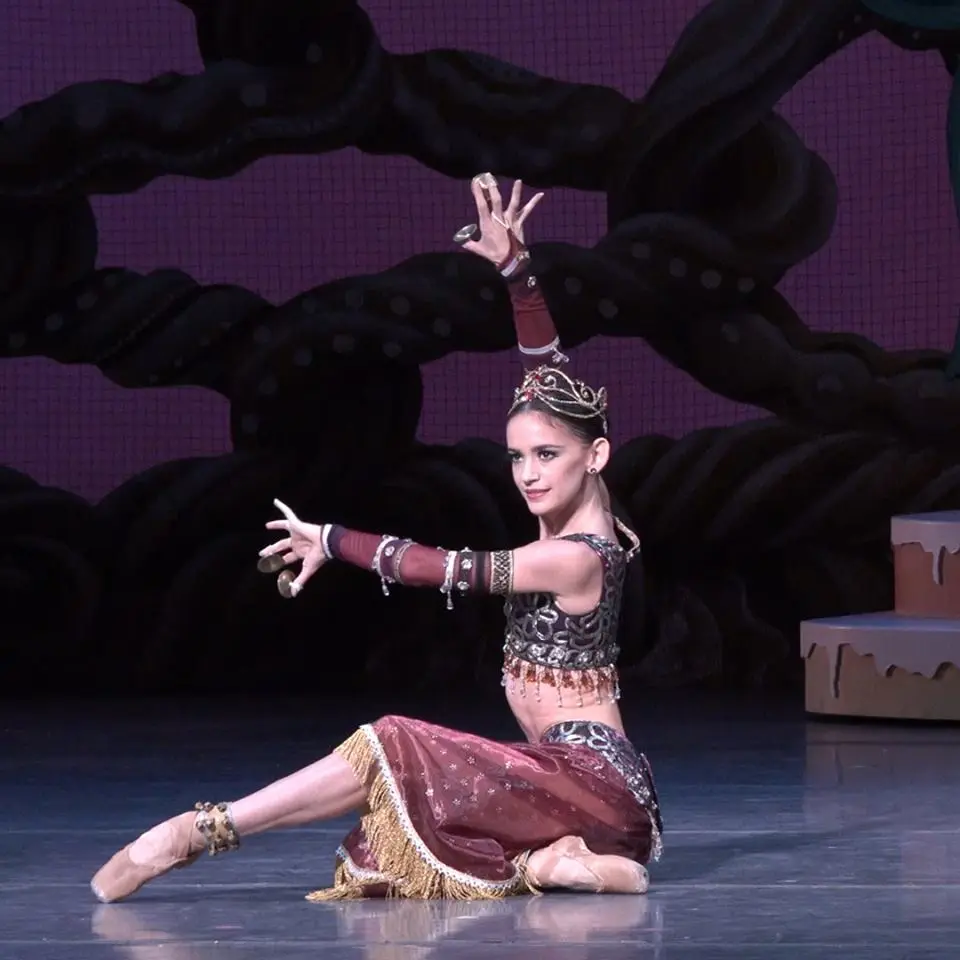
Balanchine’s Nutcracker dedicates all the best dancing to women. Both the corps de ballet pieces, Waltz of the Snowflakes and Waltz of the Flowers, are danced exclusively by women. Both scenes accomplish more in the way of dance than many choreographers who have added men and tried to make bigger splashes with much larger, complex casts. Each is remarkable for the heightened musicality and the mesmerizing way in which Balanchine moves dancers around. Along with all the other principal parts for women, Dewdrop and Sugar Plum (Ashley Knox and Tricia Albertson), the five Marzipan Shepherdesses, and especially the solo female Arabian dancer (Emily Bromberg), it’s clear that the driving domain of this production is female.
Epilogue
I have written before about identity politics in dance, most recently as part of a DancePlug review of ABT’s La Bayadère. Nutcracker has had its own problems with getting costuming and character issues right. Much of it recently has involved the ethnic caricature in Tea, or danse chinoise as it is labeled in the original score. Last year New York City Ballet, partly in response to an initiative by Phil Chan and company soloist Georgina Pazcoguin eliminated the grotesque makeup and wig choices. But the last time I saw NYCB’s Nutcracker the upturned index finger pose was still part of the on stage baggage. It tends to add a layer of racial caricature to this variation while it’s clear that in the other second act variations, people are simply dancing as themselves. The Miami City Ballet version has eliminated the finger business, All three of the dancers, two women and a man, who danced in Friday’s Tea performance were Asian and danced in recognizably familiar costume without added makeup. In the variation the male dancer arrives in a box, much like the windup toys in Act I. It is another example of how ballet and entertainment can unwittingly disguise identity issues and promote harmful attitudes. Seeing the characters in danse chinoise ultimately emerging fully as roles for real people still remains a hurdle left to clear.
(The reviewed performance took place on Friday November 30, 2018 at the Dorothy Chandler Pavilion in Los Angeles. Special thanks to Robert LaFosse for the added information on Lev Ivanov and Jerome Robbins)
Other Articles
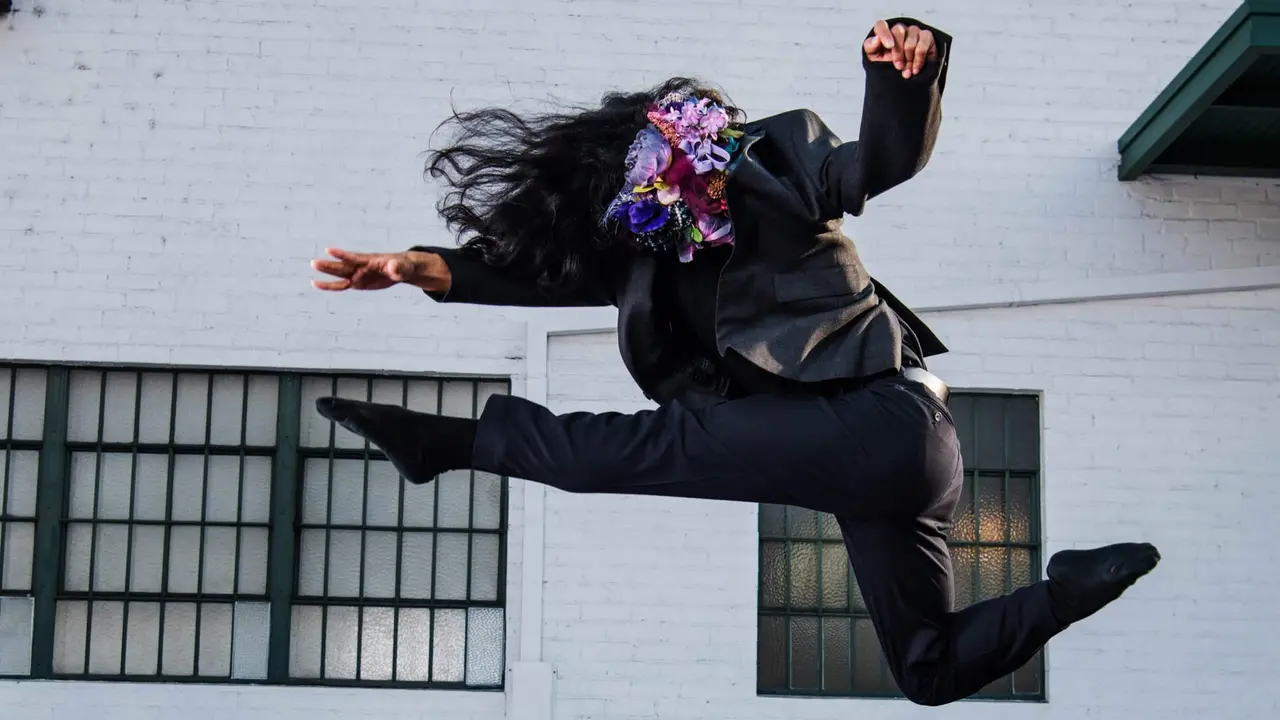
Flowered Faces, Challenging Contexts Mark L.A. Dance Project Return to Live Performance
Steven WoodruffFor a few moments before the beginning of Solo at Dusk, Bobbi Jene Smith’s new, commissioned work for Los Angeles Dance Project, the blue sky above the improvised outdoor theate...

Book Review: “Final Bow For Yellowface” Lays Out A Route Toward Inclusion
Steven WoodruffPhil Chan's book "Final Bow For Yellowface" is an ever relevant read that tackles the topic of racial stereotypes within dance, while laying out a route towards increased inclus...
Steven Woodruff lives in Los Angeles where he is a professional musician, dancer, educator, and writer. His writing includes original poetry and translations as well articles on film, stage, television, and culture. He reviews dance and music covering national and international touring concert programs as well as local companies for DancePlug, DanceChannelTV, and BachTrack in the UK.